How to Ask and Answer "Where Are You?" in Egyptian Arabic
What's the difference between إنت فين؟ (Enta Fean) and إنت رايح فين؟ (Enta Rayh Fean) Learn how Egyptians ask where someone is, where they're going, and how to answer naturally in everyday conversations.

Muhammad
Nov 9, 2026 • 5 min read
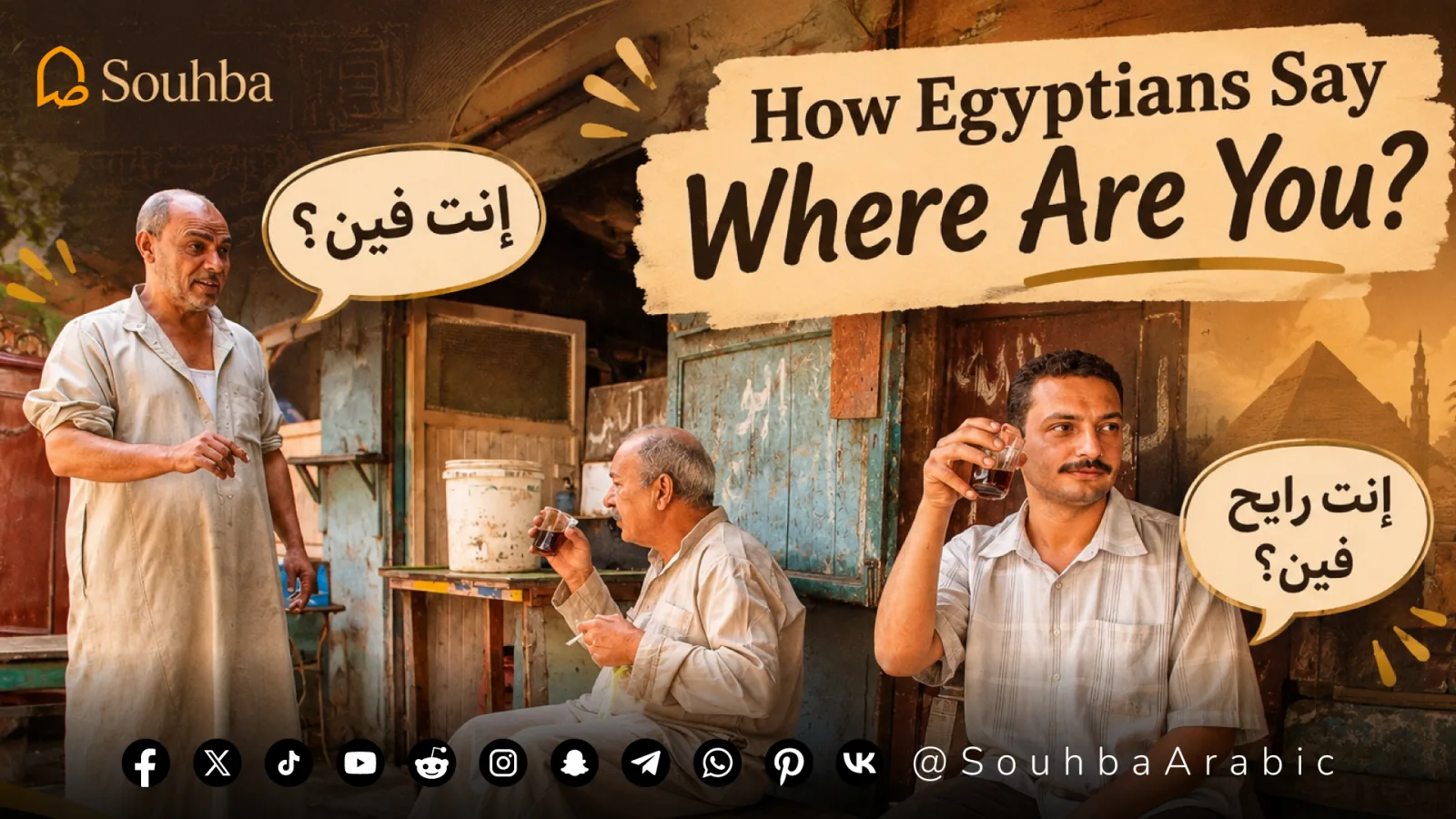
إنت فين؟ vs. إنت رايح فين؟ — Where Are You in Egyptian Arabic?
If you're learning Egyptian Arabic, you'll hear إِنْتَ فِين؟ and إِنْتَ رَايِح فِين؟ quite often. They sound similar, but they ask about two different things:
| Question | Meaning | What It Asks |
|---|---|---|
| إِنْتَ فِين؟ (Enta fēn?) | Where are you? | Your current location |
| إِنْتَ رَايِح فِين؟ (Enta rāyeḥ fēn?) | Where are you going? | Your destination |
The first asks about someone's current location. The second asks about their destination.
Let's look at how Egyptians use them in everyday conversation.
1. إِنْتَ فِين؟ — Where Are You?
إِنْتَ فِين؟ (Enta fēn?) is how you ask someone where they are right now.
You might use it when you're meeting a friend, waiting for someone, or trying to find out whether someone is at home or on their way.
Common Replies
| Egyptian Arabic | Transliteration | Meaning |
|---|---|---|
| أَنَا فِي البِيت. | Ana fil-bēt. | I'm at home. |
| أَنَا فِي الشُّغْل. | Ana fish-shughl. | I'm at work. |
| أَنَا فِي الطَّرِيق. | Ana fiṭ-ṭarīʾ. | I'm on the road / on my way. |
| أَنَا فِي السِّكَّة. | Ana fis-sikka. | I'm on my way. |
Shorter Forms
You'll also hear the shorter expression:
| Arabic | Transliteration | Addressed To | Meaning |
|---|---|---|---|
| فِينَك؟ | Fēnak? | A man | Where are you? |
| فِينِك؟ | Fēnik? | A woman | Where are you? |
These are natural conversational forms of asking where someone is. Depending on the situation and tone, فِينَك؟ can also sound like "Where have you been?"—especially when someone hasn't been around for a while.
2. إِنْتَ رَايِح فِين؟ — Where Are You Going?
إِنْتَ رَايِح فِين؟ (Enta rāyeḥ fēn?) asks about someone's destination: where they're heading now or planning to go.
Speaking to a Man
| Arabic | Transliteration | Meaning |
|---|---|---|
| إِنْتَ رَايِح فِين؟ | Enta rāyeḥ fēn? | Where are you going? |
| رَايِح فِين؟ | Rāyeḥ fēn? | Where are you going? (without "you") |
Speaking to a Woman
| Arabic | Transliteration | Meaning |
|---|---|---|
| إِنْتِ رَايْحَة فِين؟ | Enti rāyḥa fēn? | Where are you going? |
| رَايْحَة فِين؟ | Rāyḥa fēn? | Where are you going? (without "you") |
Teacher's tip: You don't always need to say إِنْتَ or إِنْتِ. In everyday Egyptian Arabic, the meaning is clear from context.
Common Replies
| Egyptian Arabic | Transliteration | Meaning |
|---|---|---|
| رَايِح البِيت. | Rāyeḥ il-bēt. | I'm going home. |
| رَايِح الشُّغْل. | Rāyeḥ ish-shughl. | I'm going to work. |
| رَايِح عَنْد صَاحْبِي. | Rāyeḥ ʿand ṣāḥbi. | I'm going to my friend's place. |
| رَايِح مِشْوَار. | Rāyeḥ mishwār. | I'm going out to run an errand. |
| لِسَّه مَا قَرَّرْتِش. | Lissa ma qarrartish. | I haven't decided yet. |
3. What's the Difference Between رَايِح and بِتْرُوح?
You may also hear:
بِتْرُوح فِين؟ (Bitrūḥ fēn?)
This is related to رَايِح فِين؟, but the two forms can suggest different time frames.
| Form | Type | What It Suggests | Example |
|---|---|---|---|
| رَايِح (rāyeḥ) | Active participle | Going somewhere now or intending to go | رَايِح فِين دِلْوَقْتِي؟ — Where are you going now? |
| بِتْرُوح (bitrūḥ) | Present-tense verb | A usual or repeated activity (often) | بِتْرُوح فِين كُلّ يُوم؟ — Where do you go every day? |
Compare These
| Arabic | Transliteration | Meaning |
|---|---|---|
| رَايِح فِين دِلْوَقْتِي؟ | Rāyeḥ fēn dilwaʾti? | Where are you going now? |
| بِتْرُوح فِين كُلّ يُوم؟ | Bitrūḥ fēn kull yōm? | Where do you go every day? |
| بِتْرُوح فِين فِي الوِيك إِنْد؟ | Bitrūḥ fēn fil-weekend? | Where do you usually go on weekends? |
Teacher's tip: The context matters. بِتْرُوح فِين؟ doesn't always have to mean a routine. But when you're asking someone where they're heading right now, رَايِح فِين؟ is a natural choice.
4. Useful Replies When Someone Asks Where You Are
Here are a few expressions you can use in real conversations:
| Egyptian Arabic | Transliteration | Meaning |
|---|---|---|
| أَنَا فِي البِيت | Ana fil-bēt | I'm at home |
| أَنَا فِي الشُّغْل | Ana fish-shughl | I'm at work |
| أَنَا فِي الطَّرِيق | Ana fiṭ-ṭarīʾ | I'm on the road / on my way |
| أَنَا فِي السِّكَّة | Ana fis-sikka | I'm on my way |
| قَرَّبْت أَوْصَل | ʾArrabt awṣal | I'm almost there |
| أَنَا نَازِل أَهُو | Ana nāzil ahu | I'm coming down now / I'm heading out now |
Note: أَنَا فِي السِّكَّة is a natural way to tell someone you're on your way. أَنَا نَازِل أَهُو is a little different: it suggests that you're just coming down or heading out now, rather than simply being somewhere along the way.
5. Useful Replies When Someone Asks Where You're Going
| Egyptian Arabic | Transliteration | Meaning |
|---|---|---|
| رَايِح البِيت | Rāyeḥ il-bēt | I'm going home |
| رَايِح الشُّغْل | Rāyeḥ ish-shughl | I'm going to work |
| رَايِح عَنْد صَاحْبِي | Rāyeḥ ʿand ṣāḥbi | I'm going to my friend's place |
| رَايِح مِشْوَار | Rāyeḥ mishwār | I'm going on an errand |
| لِسَّه مَا قَرَّرْتِش | Lissa ma qarrartish | I haven't decided yet |
| وَاللَّهِ لِسَّه مِش عَارِف | Wallāhi lissa mish ʿārif | Honestly, I don't know yet (said by a man) |
| وَاللَّهِ لِسَّه مِش عَارْفَة | Wallāhi lissa mish ʿārfa | Honestly, I don't know yet (said by a woman) |
Tip: You can use وَاللَّهِ (wallāhi) here to add emphasis, much like "honestly" or "I swear" in English. The exact feeling depends on the tone and situation.
6. A Short Everyday Conversation
Here's how the expressions might sound in a simple conversation between two friends:
| Speaker | Arabic | Transliteration | English |
|---|---|---|---|
| A | إِنْتَ فِين؟ | Enta fēn? | Where are you? |
| B | أَنَا فِي السِّكَّة، قَرَّبْت أَوْصَل. | Ana fis-sikka, ʾarrabt awṣal. | I'm on my way; I'm almost there. |
| A | طَيِّب، رَايِح فِين بَعْد كِدَه؟ | Ṭayyib, rāyeḥ fēn baʿd kida? | So, where are you going after that? |
| B | رَايِح البِيت. | Rāyeḥ il-bēt. | I'm going home. |
Notice how the first question asks about the person's current location, while the second asks about their next destination.
Quick Recap
| Expression | Arabic | Transliteration | What It Asks |
|---|---|---|---|
| Where are you? | إِنْتَ فِين؟ | Enta fēn? | Your current location |
| Where are you? (shorter) | فِينَك؟ / فِينِك؟ | Fēnak? / Fēnik? | Your current location (to a man / woman) |
| Where are you going? | إِنْتَ رَايِح فِين؟ | Enta rāyeḥ fēn? | Your destination (to a man) |
| Where are you going? (to a woman) | إِنْتِ رَايْحَة فِين؟ | Enti rāyḥa fēn? | Your destination |
| Where are you going? (without "you") | رَايِح فِين؟ / رَايْحَة فِين؟ | Rāyeḥ fēn? / Rāyḥa fēn? | Your destination |
| Where do you usually go? | بِتْرُوح فِين؟ | Bitrūḥ fēn? | A usual or repeated destination (depending on context) |
The Easiest Way to Remember
فِين؟ asks where someone is. رَايِح فِين؟ asks where they're heading.
One is about location. The other is about direction. Once you hear them in real conversations, the difference becomes natural.
Practice Tip
Try using these phrases the next time you're texting or speaking with an Egyptian friend. Start with إِنْتَ فِين؟ when you're waiting for someone. Then try رَايِح فِين؟ when you're curious about their plans.
The more you use them, the more natural they'll feel.
Master the Arabic Language
Learn Egyptian Arabic, MSA, or Quran & Tajweed 1-on-1 with patient native tutors.
Free 30-minute trial · no card needed