Food Manners in an Egyptian Home: What Kids Learn at Mealtimes
What might you hear at an Egyptian family meal? Learn the everyday manners children are taught—from saying Bismillah and eating with the right hand to sharing food, avoiding waste, thanking the cook, and the Egyptian Arabic phrases parents actually use.
Nady
Sep 28, 2026 • 7 min read
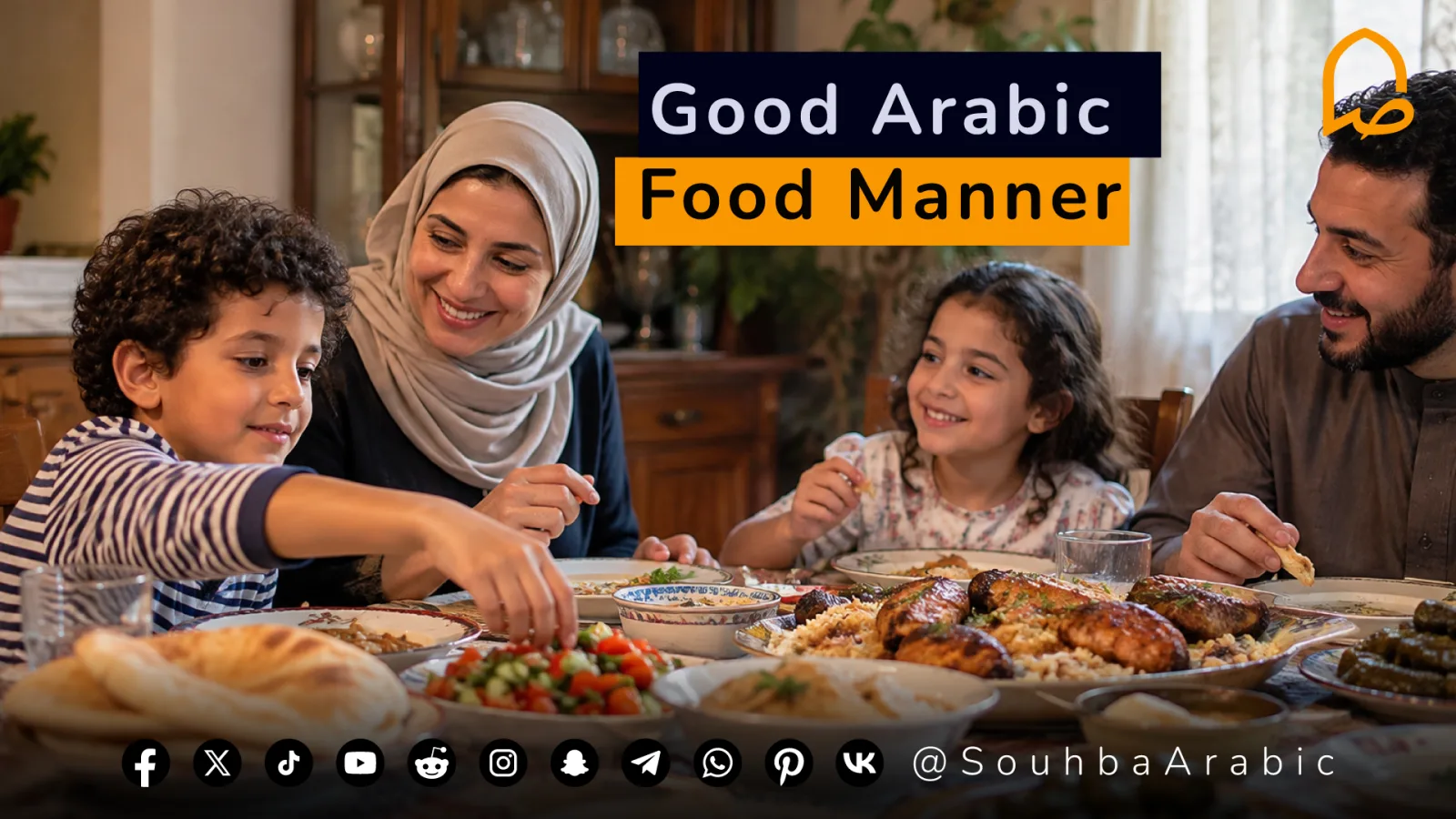
If you ever eat with an Egyptian family, you’ll probably notice that children are taught a lot of small habits around the table.
They say Bismillah before they start. They use their right hand. They’re told to wait, take only what they can finish, and thank the person who cooked. You might hear a parent say something like استنى شوية (istanna shwayya – “wait a little”) or خد على قدك (khod ʿala addak – “take only as much as you need”).
Some of these habits come straight from Islamic teachings. Others are simply Egyptian family customs or ordinary good manners.
That difference is worth noticing. Not everything you see at an Egyptian dinner table is a religious rule.
Religion or culture?
This article looks at the habits that come from Islam, the ones that come from Egyptian family life, and the ones that are just everyday table manners. Knowing the difference helps you understand what’s actually happening around you.
1. Saying “Bismillah” before eating
One of the first things many Muslim children learn is:
بِسْمِ اللهِ
*Bismillāh
“In the name of Allah.”
The Prophet Muhammad ﷺ taught Muslims to mention Allah’s name before eating and to eat with the right hand. This is part of Islamic eating etiquette, not something unique to Egypt.
A parent might simply remind a child:
قُلْ بِسْمِ اللهِ
**Ol Bismillāh.*
“Say Bismillah.”
For a young child, this can become so automatic that they say it before they even pick up the first bite.
2. Eating with the right hand
Using the right hand for eating is another Islamic practice that children are commonly taught.
In everyday Egyptian Arabic, a parent might say:
كُلْ بِإِيدَكَ اليمين.
**Kol bi-īdak el-yamīn.*
“Eat with your right hand.”
For a girl, it becomes:
كُلِي بِإِيدِكِ اليمين.
*Koli bi-īdiki el-yamīn.
A useful note for learners: إيد (īd) is the everyday Egyptian word for “hand.” In Modern Standard Arabic you’ll more often see يَد (yad). So if you’re learning Egyptian Arabic, you’re much more likely to hear إيدك than the formal يَدُكَ in a normal family conversation.
3. Not insulting the food
This one is more about manners than a specific religious rule.
If a child doesn’t like a dish, parents usually teach them not to make a big show of it or insult the person who cooked.
A child might say:
مِش عاجبني.
**Mesh ʿāgbani.*
“I don’t like it.”
That’s a normal Egyptian expression, but saying it directly about someone’s cooking can still sound rude. A more polite approach is simply to take a small amount, try it, and leave the rest if you don’t want more.
This is especially useful when you’re a guest. You don’t need to pretend you love every dish — but you also don’t need to announce that you hate it.
4. Taking only what you can eat
Egyptian family meals often have several dishes in the middle of the table. Children are usually encouraged to take a reasonable amount rather than piling their plate high and leaving most of it.
A phrase you may hear from a parent is:
خُدْ على قدّك.
**Khud ʿala addak.*
“Take only as much as you need.”
The expression على قدّك has the idea of “according to your measure.” In this context it means: don’t take more than you can handle.
You might also hear:
خُدْ على قدّك الأول، ولو عايز زوّد.
**Khud ʿala addak el-awwal, we law ʿāyez zawwed.*
“Take a reasonable amount first, and add more if you want.”
This phrase is useful far beyond the dinner table.
5. Waiting and leaving some for others
When food is shared, children are often reminded not to take everything they want right away.
You might hear:
اِسْتَنَّى شُوَيَّة.
**Istanna shwayya.*
“Wait a little.”
Or:
خَلِّي لِغَيْرَكَ.
**Khallī li-ghērak.*
“Leave some for others.”
The exact wording varies from family to family, but the idea is simple: the food is shared, so think about the people eating with you. This becomes especially noticeable with popular dishes or desserts that everyone is reaching for from the same plate.
6. Some rules are just table manners
Not everything a child hears at an Egyptian table comes from religion.
Parents also teach ordinary manners such as:
- Don’t talk with your mouth full
- Don’t interrupt someone who’s eating
- Don’t grab food from someone else’s plate
- Wait until everyone has been served when it makes sense
- Don’t make a mess
- Don’t blow directly on someone else’s food
These are household and social etiquette, not automatic Islamic rulings. Families also differ. One household may be strict about a particular habit while another barely mentions it. That’s normal.
7. Thanking the person who cooked
If someone cooked for you, one of the most common expressions you’ll hear in Egypt is:
تِسْلَمْ إيدَك.
**Tislam īdak.*
“Bless your hands.”
It’s a warm way of thanking someone for the food they prepared.
When speaking to a woman, you say:
تِسْلَمِي إيدِك.
*Tislami īdik.
You don’t need to translate it word-for-word in your head. In real Egyptian Arabic, تسلم إيدك simply functions as praise and thanks for someone’s cooking.
After eating, a Muslim may also say:
الحَمْدُ لِلَّهِ
**Al-ḥamdu lillāh.*
“Praise be to Allah.”
These expressions sit naturally alongside ordinary family conversation. Religion and everyday language are not always kept in separate boxes.
8. What you might actually hear
Here’s a more realistic picture of how some of these phrases can come together:
Mother:
قُلْ بسم الله الأول.
Ol Bismillāh el-awwal.
“Say Bismillah first.”
Child:
بسم الله.
Bismillāh.
Mother:
خُدْ على قدّك، يا حبيبي.
Khud ʿala addak, ya ḥabibi.
“Take only as much as you need, sweetheart.”
Child:
أنا مش عايز ده.
Ana mesh ʿāyez da.
“I don’t want this.”
Mother:
خلاص، سيبه. بس خُد من ده.
Khalāṣ, sība. Bas khod men da.
“Okay, leave it. Just take some of this.”
Later, after the meal:
Child:
تسلم إيدِك يا ماما.
Tislam īdik ya mama.
“Thank you, Mom. / Bless your hands.”
This is much closer to the language you’ll actually hear than a list of formal textbook sentences.
A small cultural note: the table is social
An Egyptian meal is often not just about finishing your plate.
People keep talking long after the main food is served. Someone may offer you more even when you’re already full. A parent may gently encourage a child to eat a little more while someone else is bringing tea, fruit, or dessert.
That’s why these small phrases become useful:
كِفاية، شُكرًا.
**Kifāya, shokran.*
“That’s enough, thank you.”
أنا شَبْعان.
**Ana shabʿān.*
“I’m full.” (male speaker)
أنا شَبْعانة.
**Ana shabʿāna.*
“I’m full.” (female speaker)
And if someone cooked:
تسلم إيدك، الأكل حلو أوي.
**Tislam īdak, el-akl ḥelw awi.*
“Thank you — the food is really good.”
These are the kinds of expressions that help you participate naturally instead of just translating sentences from a book.
What’s religious, and what’s Egyptian?
Here’s a simple way to keep the distinction clear:
| Habit | Where it comes from |
|---|---|
| Saying Bismillah before eating | Islamic practice |
| Eating with the right hand | Islamic practice |
| Praising Allah after eating | Islamic practice |
| Avoiding waste | Supported by Islamic teachings and also taught as good household behavior |
| Taking a reasonable amount of food | Family/social etiquette (also consistent with avoiding waste) |
| Waiting and sharing | Ordinary family and social manners |
| Not talking with your mouth full | General table etiquette |
| Thanking the cook with تسلم إيدك | Egyptian/Arabic social expression |
The categories can overlap. A Muslim family may teach a habit for both religious and practical reasons. The important thing is not to treat every Egyptian custom as a religious requirement.
The Arabic worth remembering
If you’re visiting an Egyptian home, these few expressions will take you surprisingly far:
| Arabic | Transliteration | Meaning |
|---|---|---|
| بِسْمِ اللهِ | Bismillāh | In the name of Allah |
| خُدْ على قدّك. | Khud ʿala addak. | Take only as much as you need. |
| اِسْتَنَّى شُوَيَّة. | Istanna shwayya. | Wait a little. |
| خَلِّي لِغَيْرَكَ. | Khallī li-ghērak. | Leave some for others. |
| كِفاية، شُكرًا. | Kifāya, shokran. | That’s enough, thank you. |
| أنا شَبْعان / شَبْعانة. | Ana shabʿān / shabʿāna. | I’m full. |
| تِسْلَمْ إيدَك / تِسْلَمِي إيدِك. | Tislam īdak / Tislami īdik. | Thank you; bless your hands. |
These are small expressions, but they tell you something important about Egyptian Arabic: a lot of natural conversation is built from short phrases whose meaning comes from the situation, the relationship between the speakers, and the tone.
If you’re learning Egyptian Arabic, learning these small moments is often more useful than memorizing long textbook dialogues.
Master the Arabic Language
Learn Egyptian Arabic, MSA, or Quran & Tajweed 1-on-1 with patient native tutors.
Free 30-minute trial · no card needed