What Is the Most Popular Drink in Egypt?
Tea is one of the most common everyday drinks in Egypt. Discover how Egyptians enjoy it, learn the difference between shāy koshari and shāy fatla, and pick up useful phrases for ordering tea in Egyptian Arabic.
Nady
Nov 8, 2026 • 5 min read
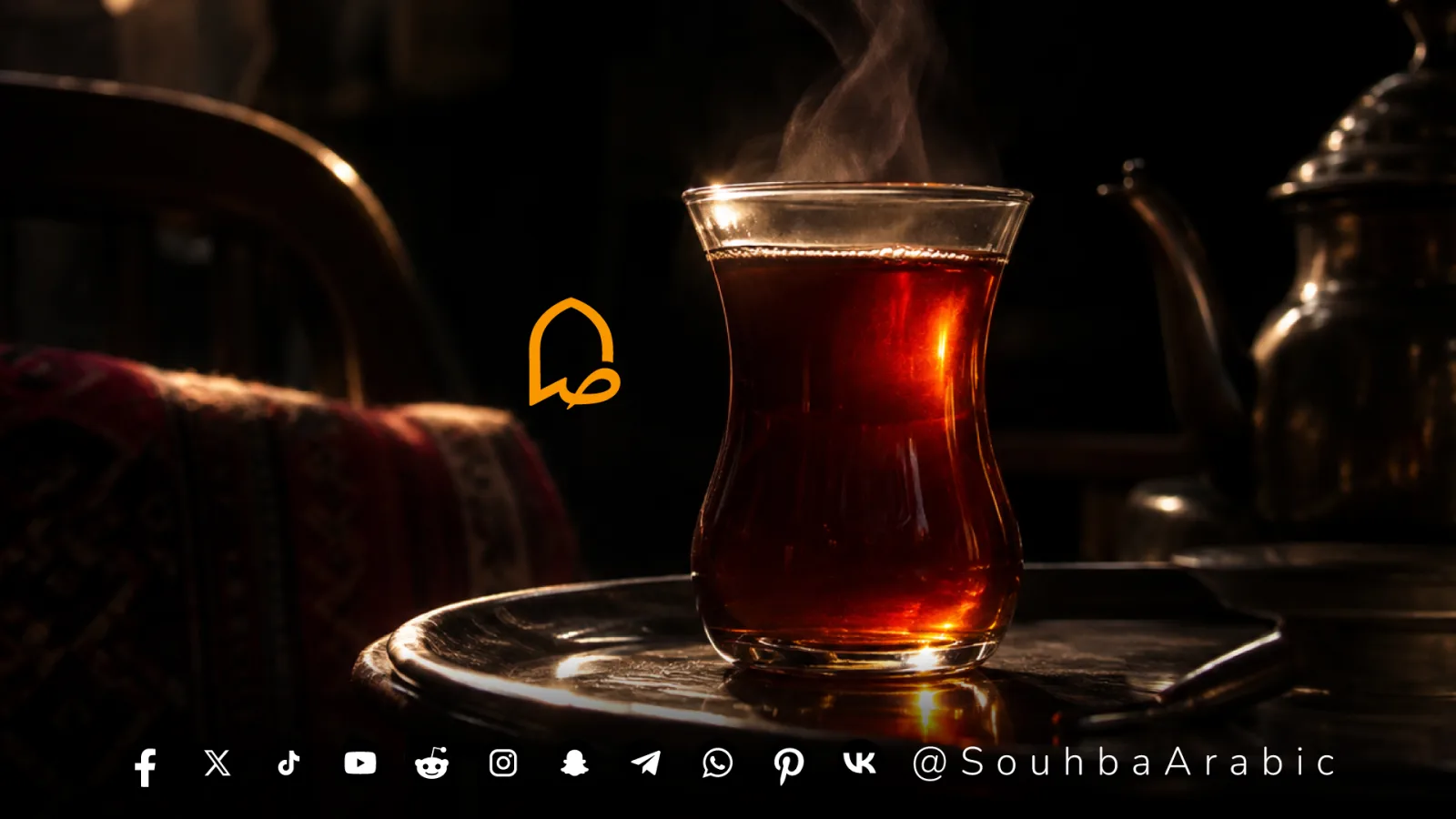
If you walk into an Egyptian café, visit someone's home, or stop at a small local shop, there's a good chance you'll find someone drinking tea.
شَاي (shāy) — black tea — is one of the most common everyday drinks in Egypt. People enjoy it at home, at work, in traditional cafés, and during social visits. It's affordable, familiar, and deeply woven into daily routines.
But ordering tea in Egypt can be a little different from ordering it in a Western café. You might be asked how you like your sugar, and you may hear people distinguish between two common styles: شَاي كُشْرِي (shāy koshari) and شَاي فَتْلَة (shāy fatla).
Let's look at what they mean and how to order your tea in Egyptian Arabic.
Quick Answer
| Question | Answer |
|---|---|
| What is the most popular drink in Egypt? | شَاي (shāy) — black tea |
| How is it usually served? | Hot, in a small glass, often strong and sweet |
| Common styles | شَاي كُشْرِي (shāy koshari) and شَاي فَتْلَة (shāy fatla) |
| Common additions | Mint or milk |
| Where to find it | Homes, workplaces, traditional cafés (ʾahwa), local shops |
| Key question you'll hear | السُّكَر إِيه؟ (Is-sukkar ēh?) — "How do you take your sugar?" |
What Kind of Tea Do Egyptians Drink?
The everyday choice is usually black tea. It's commonly served hot in a small glass, often strong and sweetened with sugar. Some people prefer it plain, while others enjoy it with mint or milk.
Here are the main types you may come across:
| Type | Arabic | Pronunciation | Description |
|---|---|---|---|
| Café-style tea | شَاي كُشْرِي | shāy koshari | A traditional café-style tea made with loose black tea. The tea is put directly into the glass, and boiling water is poured over it. Sugar may be added according to the order. |
| Tea bag tea | شَاي فَتْلَة | shāy fatla | Tea made with a tea bag. The word fatla refers to the string attached to the bag. |
| Mint tea | شَاي بِالنَّعْنَاع | shāy bin-naʿnāʿ | Black tea with fresh mint. |
| Milk tea | شَاي بِاللَّبَن | shāy bil-laban | Tea with milk. |
You'll often find these options in a traditional قَهْوَة (ʾahwa) — the Egyptian word for a traditional local café. Despite the name, an ʾahwa is not necessarily a place where people only drink coffee. Tea is a familiar order there, too.
How Do Egyptians Take Their Tea?
One thing worth knowing before ordering tea in a traditional Egyptian café: the sugar may be mixed directly into your glass rather than served separately.
You may hear the person serving you ask:
السُّكَر إِيه؟
Is-sukkar ēh?
"How do you take your sugar?"
Here are your answer options:
| Egyptian Arabic | Pronunciation | Meaning | Best For |
|---|---|---|---|
| سَادَة | sāda | Plain / without sugar | If you don't want any sugar |
| خَفِيف | khafīf | Light sugar | If you want a little sweetness |
| مَظْبُوط | maẓbūṭ | Regular or balanced sugar | The standard Egyptian sweetness |
| زِيَادَة | ziyāda | Extra sugar | If you like it very sweet |
| سُكَّر بَرَّة | sukkar barra | Sugar on the side | If you want to control it yourself |
Good to know: The exact amount of sugar can vary from one café to another. If you're used to drinking tea with very little sugar, you might find the regular Egyptian sweetness stronger than you expect.
Tip: If you're not sure what you'll prefer, سُكَّر بَرَّة (sukkar barra) is a useful request. It means you want the sugar served separately so you can add it yourself.
How to Order Tea in Egyptian Arabic
You don't need complicated Arabic to order a glass of tea. A simple and polite pattern is:
وَاحِد + نوع الشاي + طريقة السكر + لَوْ سَمَحْت
Wāḥid + type of tea + sugar preference + law samaḥt.
In other words: "One [type of tea], [sugar preference], please."
Order Examples
| # | Arabic | Transliteration | English |
|---|---|---|---|
| 1 | وَاحِد شَاي مَظْبُوط، لَوْ سَمَحْت. | Wāḥid shāy maẓbūṭ, law samaḥt. | "One tea with regular sugar, please." |
| 2 | وَاحِد شَاي بِالنَّعْنَاع، سُكَّر خَفِيف. | Wāḥid shāy bin-naʿnāʿ, sukkar khafīf. | "One mint tea with light sugar." |
| 3 | وَاحِد شَاي فَتْلَة، وَالسُّكَر بَرَّة. | Wāḥid shāy fatla, wis-sukkar barra. | "One tea made with a tea bag, with the sugar on the side." |
A Short Conversation at an Egyptian Café
| Speaker | Arabic | Transliteration | English |
|---|---|---|---|
| Customer | لَوْ سَمَحْت يَا بَاشَا، وَاحِد شَاي كُشْرِي بِالنَّعْنَاع. | Law samaḥt yā bāsha, wāḥid shāy koshari bin-naʿnāʿ. | "Excuse me, boss, one loose-tea glass with mint, please." |
| Server | مِنْ عِينِي! السُّكَر إِيه؟ | Min ʿēni! Is-sukkar ēh? | "Gladly! How do you take your sugar?" |
| Customer | خَفِيف، شُكْرًا. | Khafīf, shukran. | "Light sugar, thank you." |
| Server | حَاضِر. | Ḥāḍir. | "Right away." |
Cultural note: You'll notice يَا بَاشَا (yā bāsha) in the conversation. It's a familiar, friendly way to address someone in many everyday Egyptian situations. You don't need to use it, but you may hear it in local cafés.
Tea and Egyptian Hospitality
Tea is also a familiar part of welcoming guests in Egypt. When you visit someone's home or sit with someone for a conversation, you may be offered a glass.
Here are the phrases you may hear:
| Addressed To | Arabic | Transliteration | English |
|---|---|---|---|
| A man | تِحِبّ تِشْرَب شَاي؟ | Tiḥibb tishrab shāy? | "Would you like some tea?" |
| A woman | تِحِبّي تِشْرَبي شَاي؟ | Tiḥibbi tishrabi shāy? | "Would you like some tea?" |
| A man | اتْفَضَّل شَاي! | Etfaḍḍal shāy! | "Please, have some tea!" |
Why it matters: When someone offers you tea, they're often making you feel welcome and inviting you to spend a little time together. A simple شُكْرًا (shukran) — "thank you" — is always useful.
Your Next Glass of Shāy
Tea is not just something people drink when they're thirsty. It's part of ordinary moments in Egypt: a break at work, a conversation at a café, or a visit with friends and family.
The next time you're in Egypt, try ordering:
وَاحِد شَاي بِالنَّعْنَاع، سُكَّر خَفِيف، لَوْ سَمَحْت.
Wāḥid shāy bin-naʿnāʿ, sukkar khafīf, law samaḥt.
"One mint tea with light sugar, please."
You might find that a few simple Arabic words are all you need to feel a little more at home.
Master the Arabic Language
Learn Egyptian Arabic, MSA, or Quran & Tajweed 1-on-1 with patient native tutors.
Free 30-minute trial · no card needed