How to Say No Without Saying No in Egypt
In Egypt, a blunt “laʾ” (no) can sound harsh when turning down a friend’s invitation. Learn six natural Egyptian Arabic expressions people use to decline politely or avoid committing—with full vowel marks, pronunciation tips, and how to tell what they really mean
Nady
Nov 14, 2026 • 7 min read
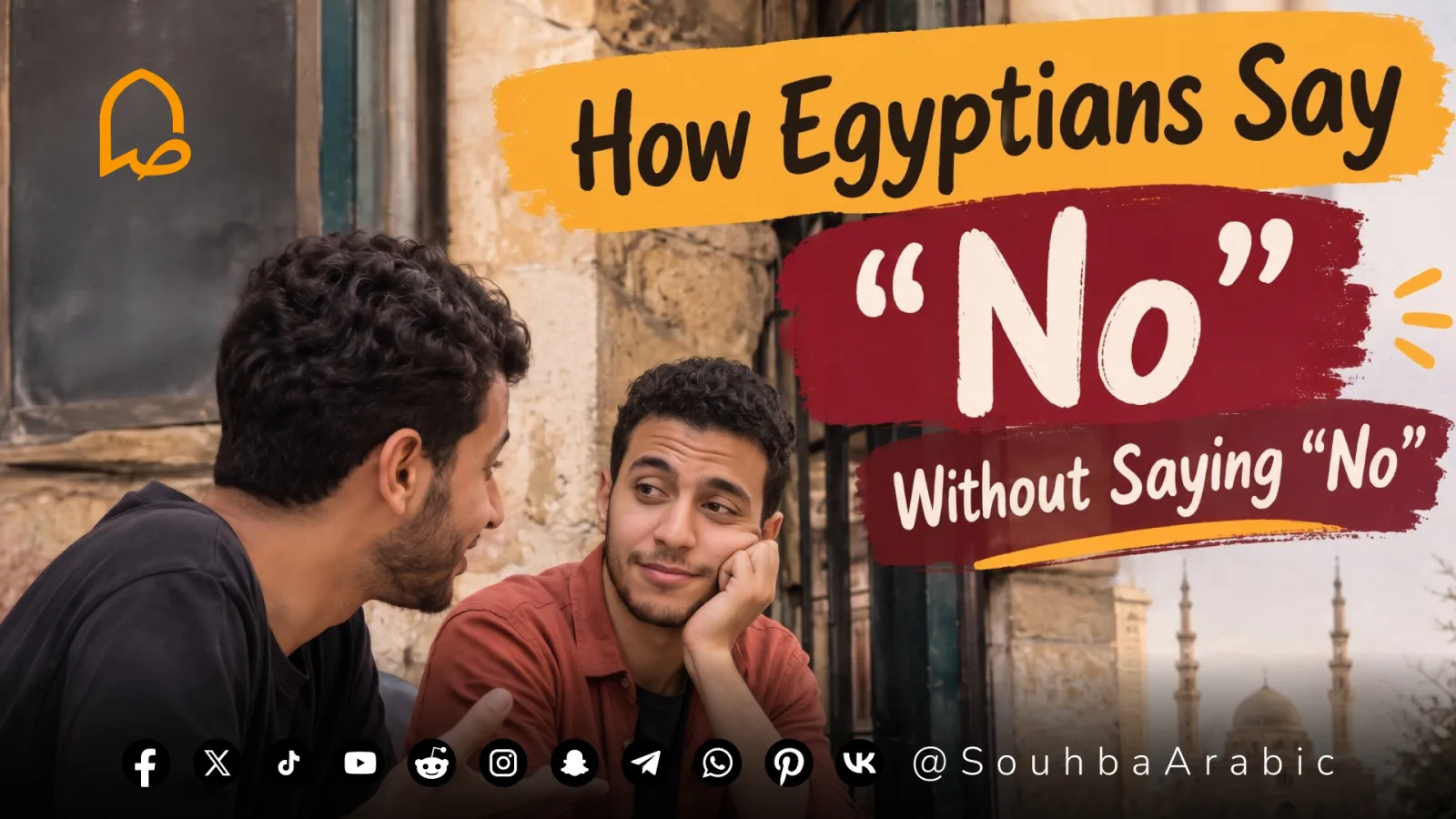
How Egyptians Say “No” Without Saying “No”: 6 Polite Expressions to Know
If you invite an Egyptian friend somewhere and they answer إِنْ شَاء الله (in shāʾ Allāh), نِشُوف (nishūf), or رَبِّنَا يِسَهِّل (rabbina yisahhil), you might wonder: Are they actually coming, or are they politely saying no?
In everyday Egyptian Arabic, people sometimes soften refusals instead of giving a direct لَأ (laʾ — no). This can make conversations sound friendly, but it can also leave you unsure whether a plan is confirmed.
Here are six expressions you’ll find useful, divided into two groups:
| Group | What It Means |
|---|---|
| Clear, polite refusals | You can use these to say no without sounding blunt |
| Open-ended expressions | These leave the answer uncertain or open for later |
At a Glance
| Expression | Arabic | Transliteration | What It Communicates |
|---|---|---|---|
| Sorry, I won’t be able to | مَعْلِش، مِش هَقْدَر | Maʿlesh, mish haʾdar | A clear, polite refusal |
| Let’s leave it for another time | خَلِّيهَا مَرَّة تَانْيَة | Khallīha marra tānya | Not this time; perhaps another time |
| It’s a bit difficult | صَعْب شُوَيَّة | Ṣaʿb shwayya | Something is difficult; possibly a gentle refusal |
| We’ll see | نِشُوف / نِبْقَى نِشُوف | Nishūf / nibʾa nishūf | An open decision or an uncertain plan |
| God willing | إِنْ شَاء الله | In shāʾ Allāh | Hope or intention; sometimes an unconfirmed plan |
| May God make things easy | رَبِّنَا يِسَهِّل | Rabbina yisahhil | A hope that things work out; not a commitment |
Part 1: Clear, Polite Ways to Decline
These expressions can help you say no without sounding unnecessarily blunt. They are especially useful when responding to friends, invitations, or casual requests.
1. مَعْلِش، مِش هَقْدَر — Sorry, I won’t be able to
مَعْلِش، مِش هَقْدَر
Maʿlesh, mish haʾdar
مَعْلِش (maʿlesh) is a very common Egyptian expression used to soften an apology, inconvenience, or refusal. When you combine it with مِش هَقْدَر (mish haʾdar — I won’t be able to), the meaning is clear: you can’t do what the other person is asking.
You can make it sound warmer by adding وَالله كَان نِفْسِي (wallāhi kān nifsī — Honestly, I really wished I could).
Example Conversation
| Speaker | Arabic | Transliteration | English |
|---|---|---|---|
| أَحْمَد | تِيجِي مَعَانَا بُكْرَة؟ | Tīgī maʿāna bukra? | Are you coming with us tomorrow? |
| عُمَر | وَالله كَان نِفْسِي، بَس مَعْلِش مِش هَقْدَر. | Wallāhi kān nifsī, bass maʿlesh mish haʾdar. | Honestly, I really wished I could, but sorry, I won’t be able to. |
Why it works: This is a useful sentence to remember when you want to decline while showing that you appreciate the invitation.
2. خَلِّيهَا مَرَّة تَانْيَة — Let’s leave it for another time
خَلِّيهَا مَرَّة تَانْيَة
Khallīha marra tānya
This expression is useful when you don’t want to accept the current invitation but would like to keep the possibility of meeting another time.
Example Conversation
| Speaker | Arabic | Transliteration | English |
|---|---|---|---|
| سَارَة | مَا تِيجِي نِشْرَب قَهْوَة بَعْد الشُّغْل؟ | Mā tīgī nishrab ʾahwa baʿd ish-shughl? | Why don’t we grab a coffee after work? |
| نُور | خَلِّيهَا مَرَّة تَانْيَة مَعْلِش، عَنْدِي مِشْوَار مُهِمّ النَّهَارْدَه. | Khallīha marra tānya maʿlesh, ʿandī mishwār muhimm in-nahārda. | Let’s leave it for another time, sorry. I have an important errand today. |
What to notice: It politely turns down today’s plan. Whether the person genuinely wants to arrange another meeting depends on what happens afterwards.
3. صَعْب شُوَيَّة — It’s a bit difficult
صَعْب شُوَيَّة
Ṣaʿb shwayya
Sometimes, instead of saying directly that they can’t come, Egyptians explain that the situation is difficult.
Example Conversation
| Speaker | Arabic | Transliteration | English |
|---|---|---|---|
| كَرِيم | مُمْكِن تِيجِي النَّهَارْدَه بِاللِّيل؟ | Momkin tīgī in-nahārda bil-lēl? | Can you come tonight? |
| طَارِق | وَالله صَعْب شُوَيَّة النَّهَارْدَه، عَنْدِي شُغْل لِحَدّ مِتْأَخَّر. | Wallāhi ṣaʿb shwayya in-nahārda, ʿandī shughl li-ḥadd mitʾakhkhar. | Honestly, tonight is a bit difficult. I have work until late. |
Important: Depending on the situation, صَعْب شُوَيَّة can be a gentle way to decline, or it can mean that something is genuinely difficult but still possible.
Tip: If someone uses it to turn down your invitation, don’t automatically assume they want you to find another solution. Sometimes a polite response is simply to accept their answer.
Part 2: Expressions That Leave Things Open
These phrases don’t necessarily mean no. They can express genuine uncertainty, leave a decision for later, or help someone avoid making a firm commitment.
The context and what the person does afterwards matter.
4. نِشُوف / نِبْقَى نِشُوف — We’ll see
نِشُوف / نِبْقَى نِشُوف
Nishūf / nibʾa nishūf
نِشُوف literally means “we’ll see.” You may also hear نِبْقَى نِشُوف (nibʾa nishūf), which leaves the decision for later.
Example Conversation
| Speaker | Arabic | Transliteration | English |
|---|---|---|---|
| زِيَاد | نِخْرُج يُوم الجُمْعَة الجَايَة؟ | Nikhrug yōm il-gomʿa il-gāya? | Shall we go out next Friday? |
| حَسَن | نِبْقَى نِشُوف يُوم الخَمِيس. | Nibʾa nishūf yōm il-khamīs. | Let’s see on Thursday. |
What to notice: This could be a genuine answer if Hassan really needs to check his plans first. But if someone simply says نِبْقَى نِشُوف and changes the subject, they may be avoiding a definite answer. You can’t know for certain from the phrase alone.
5. إِنْ شَاء الله — God willing
إِنْ شَاء الله
In shāʾ Allāh
You’ll hear إِنْ شَاء الله constantly in Egyptian conversations about future plans.
It can be a sincere expression of hope or intention.
Example Conversation (Positive)
| Speaker | Arabic | Transliteration | English |
|---|---|---|---|
| أَحْمَد | هَتِيجِي مَعَانَا بُكْرَة؟ | Hatīgī maʿāna bukra? | Are you coming with us tomorrow? |
| مَحْمُود | آه إِنْ شَاء الله، السَّاعَة كَام؟ | Āh in shāʾ Allāh, is-sāʿa kām? | Yes, God willing. What time? |
Good sign: Asking about the time is a good sign that Mahmoud is taking the plan seriously.
Example Conversation (Uncertain)
But someone might also answer only إِنْ شَاء الله without confirming anything. In that situation, the plan is still uncertain.
Important: Don’t make the mistake of assuming that إِنْ شَاء الله always means yes, or that it secretly means no. Listen to the rest of the conversation.
6. رَبِّنَا يِسَهِّل — May God make things easy
رَبِّنَا يِسَهِّل
Rabbina yisahhil
This is a common Egyptian expression used when someone hopes that a situation will work out.
You might hear it when discussing travel, work, arrangements, or future plans.
Example Conversation
| Speaker | Arabic | Transliteration | English |
|---|---|---|---|
| مُصْطَفَى | هَتْسَافِر مَعَانَا السَّاحِل الأُسْبُوع الجَاي؟ | Hatsāfir maʿāna is-Sāḥil il-usbūʿ il-gāy? | Are you travelling with us to the North Coast next week? |
| مَحْمُود | وَالله هَشُوف ظُرُوفِي، رَبِّنَا يِسَهِّل. | Wallāhi hashūf ẓurūfī, rabbina yisahhil. | Honestly, I’ll check my circumstances. Hopefully things work out. |
What to notice: In this conversation, Mahmoud hasn’t confirmed that he’s going. He still needs to check his circumstances.
Important: رَبِّنَا يِسَهِّل itself is a prayer for things to go smoothly, not a fixed way of saying no. Its meaning depends on the situation in which it’s used.
How to Tell If They Mean Yes, Maybe, or No
You won’t always be able to understand someone’s intention from one expression. Instead, pay attention to the rest of the conversation.
Here are three useful things to notice:
1. Did they give you a definite answer?
| What They Said | What It Suggests |
|---|---|
| آه، إِنْ شَاء الله (āh, in shāʾ Allāh — yes, God willing) | More affirmative, but still not an absolute guarantee |
| إِنْ شَاء الله (just in shāʾ Allāh) | Less definite; could be genuine or uncertain |
2. Did they suggest another time?
| What They Said | What It Suggests |
|---|---|
| خَلِّيهَا مَرَّة تَانْيَة + a specific day | A stronger sign that they genuinely want to meet later |
| خَلِّيهَا مَرَّة تَانْيَة alone | Polite, but less committed |
3. Did they follow up?
| Behavior | What It Suggests |
|---|---|
| They come back to discuss the plan or ask about details | More intention and genuine interest |
| They give a vague answer and never mention it again | Less likely to follow through |
Summary Table
| Expression | Arabic | Transliteration | What It Can Communicate |
|---|---|---|---|
| Sorry, I won’t be able to | مَعْلِش، مِش هَقْدَر | Maʿlesh, mish haʾdar | A clear, polite refusal |
| Let’s leave it for another time | خَلِّيهَا مَرَّة تَانْيَة | Khallīha marra tānya | Not this time; perhaps another time |
| It’s a bit difficult | صَعْب شُوَيَّة | Ṣaʿb shwayya | Something is difficult; possibly a gentle refusal |
| We’ll see | نِبْقَى نِشُوف | Nibʾa nishūf | An open decision or an uncertain plan |
| God willing | إِنْ شَاء الله | In shāʾ Allāh | Hope or intention; sometimes an unconfirmed plan |
| May God make things easy | رَبِّنَا يِسَهِّل | Rabbina yisahhil | A hope that things work out; not a commitment |
Remember: These are useful clues, not strict rules. Tone, relationship, and the situation all matter.
A Sentence You Can Use Yourself
If you’re learning Egyptian Arabic and want to decline an invitation politely without leaving the other person guessing, try this:
وَالله كَان نِفْسِي أَجِي، بَس مَعْلِش مِش هَقْدَر المَرَّة دِي.
Wallāhi kān nifsī agī, bass maʿlesh mish haʾdar il-marra dī.
“Honestly, I really wished I could come, but sorry, I can’t make it this time.”
Why this works: It’s warm, natural, and clear. You don’t need to use vague expressions when you already know you can’t make it.
Master the Arabic Language
Learn Egyptian Arabic, MSA, or Quran & Tajweed 1-on-1 with patient native tutors.
Free 30-minute trial · no card needed