Why Arabic Has Two Words for Uncle and Aunt
English uses “uncle” and “aunt” for both sides of the family, but Arabic distinguishes your father's relatives from your mother's. Learn عَمّ، عَمَّة، خَال، and خَالَة with a simple family tree, clear MSA examples, and useful vocabulary for talking about relatives.

Muhammad
Oct 18, 2026 • 6 min read
In English, your father's brother and your mother's brother are both your uncle. The same is true of your father's sister and your mother's sister: both are your aunt.
Arabic makes a distinction that English does not usually make with these everyday words. Your father's brother is عَمّ (ʿamm), while your mother's brother is خَال (khāl). The distinction also applies to aunts.
If you're learning Arabic, these four words are worth learning together. They help you describe family relationships precisely and understand conversations about relatives.
1. The Four Arabic Words You Need to Know
Start with these two pairs:
| Arabic | Transliteration | Meaning |
|---|---|---|
| عَمّ | ʿamm | Father's brother |
| عَمَّة | ʿamma | Father's sister |
| خَال | khāl | Mother's brother |
| خَالَة | khāla | Mother's sister |
The easiest way to remember them is to group them by family side:
| Family Side | Male | Female |
|---|---|---|
| Father's side | عَمّ (ʿamm) | عَمَّة (ʿamma) |
| Mother's side | خَال (khāl) | خَالَة (khāla) |
The feminine ending ـة (tāʾ marbūṭah) appears in both words for aunts: عَمّ becomes عَمَّة, and خَال becomes خَالَة.
Pronunciation Tips
Two Arabic sounds in these words may be unfamiliar if English is your first language.
| Letter | Name | Description |
|---|---|---|
| ع | ʿayn | A voiced sound produced deep in the throat. It is not the same as the vowel in the English word am. Listen to a native speaker and practise it gradually. |
| خ | khāʾ | A rough, breathy sound made toward the back of the mouth, similar to the "ch" in the Scottish word loch or the German name Bach. It is not an ordinary English "k." |
You do not need perfect pronunciation on your first day. Start by recognizing the words when you hear them, then practise saying them yourself.
2. Picture the Family Tree
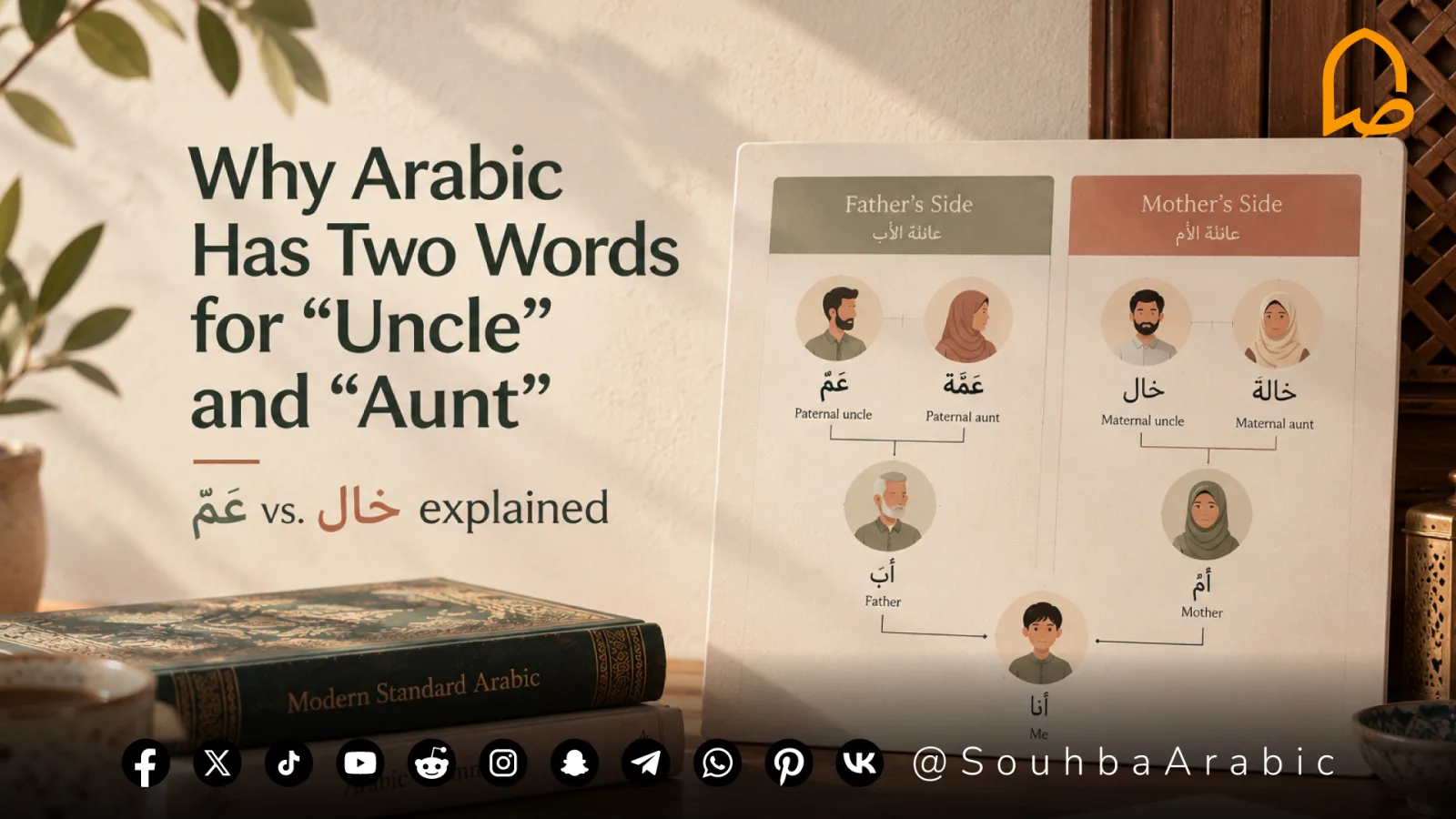
The image below shows the distinction visually: relatives on your father's side (عَمّ and عَمَّة) are on one side, and relatives on your mother's side (خَال and خَالَة) are on the other.
 The central distinction is:
| Relative | Arabic | Relationship |
|---|---|---|
| Father's brother | عَمّ (ʿamm) | Paternal uncle |
| Father's sister | عَمَّة (ʿamma) | Paternal aunt |
| Mother's brother | خَال (khāl) | Maternal uncle |
| Mother's sister | خَالَة (khāla) | Maternal aunt |
How to Say "My Uncle" and "My Aunt"
In Arabic, the word "my" often appears as a suffix attached to the noun rather than as a separate word before it. One common suffix is ـِي (-ī).
Look at these examples:
| Arabic | Transliteration | Meaning |
|---|---|---|
| هَذَا عَمِّي | Hādhā ʿammī | This is my paternal uncle. |
| هَذِهِ عَمَّتِي | Hādhihi ʿammatī | This is my paternal aunt. |
| هَذَا خَالِي | Hādhā khālī | This is my maternal uncle. |
| هَذِهِ خَالَتِي | Hādhihi khālatī | This is my maternal aunt. |
Notice how ـِي (-ī) means "my" in all four examples.
If you want to understand this pattern more fully, read our guide to Arabic attached pronouns.
Why Does the "T" Appear in عَمَّتِي?
You may notice that عَمَّة (ʿamma) becomes عَمَّتِي (ʿammatī) when you say "my paternal aunt." The same pattern appears in خَالَة (khāla) and خَالَتِي (khālatī).
The ending ة (tāʾ marbūṭah) is generally pronounced -a at the end of a word in connected speech conventions for these examples. When a suffix such as ـِي (-ī, "my") is attached, the t is pronounced:
| Base Word | + Suffix | Result | Meaning |
|---|---|---|---|
| عَمَّة | ـِي | عَمَّتِي | my paternal aunt |
| خَالَة | ـِي | خَالَتِي | my maternal aunt |
This is a useful pattern to recognize in other Arabic nouns, too. For more examples, see our guide to masculine and feminine in Arabic.
3. How to Talk About Cousins in Arabic
English uses one general word, cousin, for the children of aunts and uncles. Arabic can express the relationship more specifically by combining ابْن (ibn, "son") or بِنْت (bint, "daughter") with a family relationship.
For example:
| Arabic | Transliteration | Meaning |
|---|---|---|
| ابْن عَمِّي | ibn ʿammī | my paternal uncle's son |
| بِنْت خَالَتِي | bint khālatī | my maternal aunt's daughter |
Both people are cousins, but the Arabic expressions tell you exactly how they are related to you.
Here is another example:
| Arabic | Transliteration | Meaning |
|---|---|---|
| هَذَا ابْنُ عَمِّي | Hādhā ibnu ʿammī | This is my paternal uncle's son. |
| هَذِهِ بِنْتُ خَالَتِي | Hādhihi bintu khālatī | This is my maternal aunt's daughter. |
You do not need to memorize every possible family relationship immediately. Start with the four words for uncles and aunts, then add more specific relationships as you need them.
4. Using These Words in Real Sentences
The best way to remember vocabulary is to use it in complete sentences.
Here are a few examples in Modern Standard Arabic:
| Arabic | Transliteration | Meaning |
|---|---|---|
| عَمِّي يَعْمَلُ طَبِيبًا | ʿAmmī yaʿmalu ṭabīban | My paternal uncle works as a doctor. |
| خَالَتِي تَعِيشُ فِي لَنْدَنَ | Khālatī taʿīshu fī Landan | My maternal aunt lives in London. |
| أَزُورُ عَمَّتِي فِي نِهَايَةِ الأُسْبُوعِ | Azūru ʿammatī fī nihāyati al-usbūʿi | I visit my paternal aunt at the weekend. |
| خَالِي لَدَيْهِ ثَلَاثَةُ أَوْلَادٍ | Khālī ladayhi thalāthatu awlādin | My maternal uncle has three children. |
You may notice that the Arabic sentences contain grammatical endings that are not normally shown in everyday unvocalized writing. The vowel marks in this article are included to help beginners with pronunciation. As your reading improves, you will increasingly encounter Arabic without those marks.
5. Test Yourself
Try answering these questions before checking the answers.
1. Which word means your father's brother?
- A. خَال (khāl)
- B. عَمّ (ʿamm)
- C. خَالَة (khāla)
2. Which word means your mother's sister?
- A. عَمَّة (ʿamma)
- B. خَالَة (khāla)
- C. عَمّ (ʿamm)
3. How do you say "This is my maternal uncle" in MSA?
- A. هَذَا خَالِي (Hādhā khālī)
- B. هَذَا عَمِّي (Hādhā ʿammī)
- C. هَذِهِ خَالَتِي (Hādhihi khālatī)
4. What does بِنْت خَالَتِي mean?
- A. My paternal uncle's daughter
- B. My maternal aunt's daughter
- C. My mother's sister
Answers
| Question | Answer | Explanation |
|---|---|---|
| 1 | B — عَمّ | عَمّ (ʿamm) means father's brother. |
| 2 | B — خَالَة | خَالَة (khāla) means mother's sister. |
| 3 | A — هَذَا خَالِي | هَذَا خَالِي (Hādhā khālī) means "This is my maternal uncle." |
| 4 | B — my maternal aunt's daughter | بِنْت خَالَتِي (bint khālatī) means "my maternal aunt's daughter." |
How to Make These Words Stick
Do not memorize عَمّ، عَمَّة، خَال، and خَالَة as four unrelated vocabulary items. Connect them to people you know.
- Think of a relative on your father's side and say عَمِّي (ʿammī) or عَمَّتِي (ʿammatī).
- Think of a relative on your mother's side and say خَالِي (khālī) or خَالَتِي (khālatī).
Then practise introducing them:
| Arabic | Transliteration | Meaning |
|---|---|---|
| هَذَا عَمِّي | Hādhā ʿammī | This is my paternal uncle. |
| هَذِهِ خَالَتِي | Hādhihi khālatī | This is my maternal aunt. |
The goal is to recognize the relationship without having to translate every word in your head. Once you know these four terms, you have a useful foundation for describing your family in Arabic.
Master the Arabic Language
Learn Egyptian Arabic, MSA, or Quran & Tajweed 1-on-1 with patient native tutors.
Free 30-minute trial · no card needed